
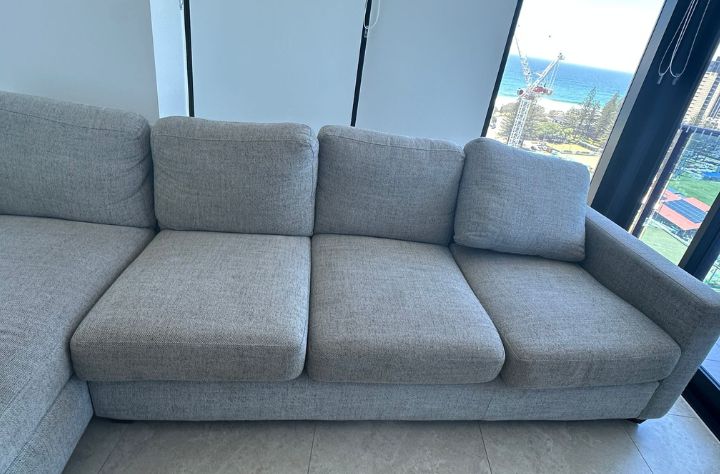
You can protect your upholstery from future stains by creating an invisible barrier on the fabric. This is done using a fabric protector spray, and by adopting a few critical daily habits. The goal is not to make your furniture untouchable, but to buy you precious time to blot a spill before it becomes a permanent stain.
This matters because your sofa and chairs are among the most expensive and frequently used items in your home. Replacing them is costly. Living with stained, smelly furniture is frustrating. A proactive defense is far simpler and more effective than panicked cleaning after a disaster.
Why You Need a Defensive Strategy, Not Just a Cleaner
Most people buy an upholstery cleaner and think they’re prepared. That’s like buying a fire extinguisher and hoping the fire never happens. A cleaner treats the problem after the fact, when the damage is often already done.
A true protection strategy does two things:
- Repels liquids: Causes spills to bead up on the surface instead of soaking in instantly.
- Resists soiling: Prevents dirt, oil from skin, and pet dander from grinding into the fibers.
By focusing on prevention, you extend the life of your furniture and drastically reduce the time you spend scrubbing it.
What Upholstery Protection Sprays Actually Are
These products are not magic. They are fluoropolymer or silicone-based solutions that bond to individual fabric fibers. Think of it as a microscopic raincoat for each thread.
When you spray it on and it dries, it changes the surface tension of the fabric. Instead of water or oil gripping the fiber and wicking inward, the liquid forms a bead that sits on top. The protection is invisible and, when applied correctly, does not change the feel or color of most fabrics.
How It Works: Fluorocarbons vs. Silicone
Understanding the difference helps you choose the right product.
| Feature | Fluorocarbon-Based Protectors (e.g., Scotchgard) | Silicone-Based Protectors |
|---|---|---|
| Protection Type | Repels both water-based and oil-based stains. | Primarily repels water-based stains. |
| Residue | Bonds to fibers invisibly. | Can leave a slightly slick or waxy feel. |
| Durability | Long-lasting; often survives a gentle cleaning. | Can break down faster with wear and sun exposure. |
| Best For | Everyday life: food, drinks, pet accidents, skin oils. | Outdoor furniture or items only exposed to rain or water spills. |
| Safety Note | Older formulas had environmental concerns, but modern water-based options are safer and standard. | Generally considered low-toxicity. |
For families and pet owners, a modern, water-based fluorocarbon protector is almost always the superior choice. It is the only type that will stop a greasy pizza drip or the oil from a dog’s fur from instantly soaking in.
How to Choose the Right Fabric Protector for Your Home
You cannot just grab any bottle off the shelf. A bad match can ruin your furniture.
Check the Manufacturer’s Cleaning Code First
This is the single most important step. Look under a cushion or on the furniture’s tag for a code. Ignoring this voids warranties and causes irreversible damage.
- W (Water-based cleaner only): You can use a water-based fabric protector.
- S (Solvent-based cleaner only): You need a solvent-based fabric protector. Water-based products can cause water rings or shrinkage on these delicate fabrics like silk, rayon, or velvet. Seek professional help if you are unsure.
- W/S (Either water or solvent): A water-based fluorocarbon protector is safe and effective.
- X (Vacuum only): Do not apply any liquid protector. These fabrics cannot get wet. You must rely solely on physical barriers.
Water-Based vs. Solvent-Based Protectors
Water-Based Protectors: The common choice today. Less odor, environmentally preferable. Ideal for cotton, linen, polyester, nylon, and most performance fabrics with a “W” or “W/S” code.
Solvent-Based Protectors: Potent odor, requires extreme ventilation. Necessary only for “S” coded fabrics. In a family home, these are best left to professional applicators.
What You Should Look For on the Label
- Stain Blocker vs. Stain Repellent: You want a dual-action “blocker and repellent” that protects against both water and oil.
- Non-Flammable When Dry: A critical safety feature for homes with fireplaces or candles.
- Low VOCs (Volatile Organic Compounds): Better for your indoor air quality.
- Odorless Once Cured: A protectant that smells like chemicals for weeks is not practical for a living room.
Step-by-Step: Applying a Protective Shield Like a Pro
The effectiveness of a protector depends 90% on the application. A rushed job is a wasted effort.
1. Clean First, Protect Second
You must deep clean the upholstery or have it professionally cleaned. A protector seals the surface. If you spray it over embedded dirt, sweat, and oils, you are sealing those contaminants in, where they will oxidize and break down the fibers. Let the fabric dry completely for 24 to 48 hours.
2. Test in a Hidden Spot
Apply the spray to a small area under a cushion or on the back of a skirt. Let it dry for 24 hours. Check for any color change, darkening, or stiffening. This confirms compatibility.
3. Prepare the Room
Ventilate thoroughly. Open windows and turn on fans. Cover nearby floors and electronics with drop cloths. The overspray will make hard floors dangerously slippery.
4. Apply Even, Light Coats
Hold the can 6 to 8 inches from the fabric. Spray in a slow, sweeping, overlapping motion.
Common Mistake: Soaking the fabric. This wastes product, extends drying time, and can leave a sticky residue.
Correct Method: Two light coats are infinitely better than one heavy coat. The surface should look damp, not wet.
5. Force the Cure
Apply the first coat. Wait 5 to 10 minutes until it is tacky, then apply the second coat. Immediately after the final coat, gently brush the fabric in one direction with a soft, clean upholstery brush. This prevents the fibers from drying stiff and matted. Allow 24 hours of undisturbed drying before use.
Non-Chemical Defenses That Actually Work
Chemical barriers are not the only line of defense. They work best when combined with physical and habit-based strategies.
Protective Covers That Don’t Look Clinical
If you have small children, large messy dogs, or a white sofa, a physical cover is your best friend.
Performance-Fabric Throws: Look for blankets made from solution-dyed acrylic or Crypton Home fabric. They are bleach-cleanable and moisture-impermeable. Drape them where people sit most.
Fitted Slipcovers: Modern, stretchy slipcovers come in box-weave textures that look like real upholstery. They are machine-washable and a practical choice for the “toddler years.”
The “High Ground” Rule
For pet owners, train your dog to stay on a designated, machine-washable blanket on one section of the sofa. It is far easier to enforce a boundary spot than a “no furniture” rule, and it confines 90% of the dirt, oil, and hair to one washable area.
A No-Eating Zone
This is a controversial but highly effective strategy. Limit meals and snacks to the kitchen and dining room. If you allow snacks, establish a rule that only non-greasy, non-staining items (like apple slices or white crackers) can be eaten on the furniture. Juice and red wine are forever banished.
Maintenance: How to Keep the Protection Strong
A protection barrier is not permanent. It wears away from friction. The seat cushions, where you slide in and out, lose protection fastest.
Perform a Quick Check Every 3 Months
Pour a few drops of water on a hidden part of the seat cushion. If the water beads up, the protection is still active. If the water wets the fabric and darkens it, the barrier is gone. It’s time to clean and reapply.
Spot Clean Correctly
Never rub a spill. Blot it immediately with a clean, white, absorbent cloth. Rubbing destroys the protective barrier and grinds the stain into the weave. Once you’ve blotted the liquid, let the area air dry. Do not apply heat.
Vacuum First, Always
Before any wet cleaning or reapplication, vacuum the furniture with an upholstery brush attachment. Sand, dust, and pet hair act like sandpaper, grinding against fibers and the protective coating every time you sit down.
Common Mistakes That Ruin Your Efforts
Even with good intentions, these errors are common:
- Sealing in Dirty Furniture: This is the biggest mistake. The protector is not a cleaner. It seals in whatever is on the fabric.
- Using the Wrong Product on “S” Code Fabrics: Water-based protectors on dry-clean-only fabrics can cause severe watermarks and texture changes that are often permanent.
- Immediate Heavy Use: Letting kids or pets on the sofa a few hours after application, before the cure is complete, compresses the still-wet protectant into the fibers and renders it useless.
- Believing It’s Bulletproof: “Protected” does not mean “stain-proof.” It means “stain-resistant.” You still need to blot spills immediately. A puddle of grape juice left overnight will still stain a protected fabric.
Real-World Scenario: The Difference a Day Makes
Based on industry research and documented evidence, consider two identical beige sofas in homes with young children and a dog.
Home A: The owner applied a fluorocarbon protector after purchasing and re-treats the seats annually. Muddy paw prints are allowed to dry and then vacuumed or brushed off. A spilled sippy cup of milk is blotted away with zero trace.
Home B: The owner relies only on a fabric cleaner. Mud gets ground in, forming a dull gray patina. The milk spill is wiped, but the residue seeps deep into the cushion, causing a sour smell weeks later that requires professional extraction to remove.
The protector in Home A did not prevent messes, but it prevented permanent damage by keeping the mess on the surface, where it could be easily removed.
FAQ: Your Pressing Protection Questions
Q: Can I use a shoe waterproofing spray on my sofa?
A: Absolutely not. The chemicals are often far more toxic, the odor can be overwhelming and long-lasting indoors, and the formula may contain silicones that discolor or damage upholstery fibers. Only use products designed and labeled for fabric/upholstery.
Q: Does fabric protection change how my sofa feels?
A: If applied correctly in light, even coats and brushed after, you should not feel a difference. A heavy hand can leave fabric feeling stiff or papery. This is a sign of over-application.
Q: How long does a single application last?
A: On the back and arms, it can last for years. On heavy-use seat cushions, it typically lasts 6 to 12 months before needing a maintenance coat. Always test with the water-drop method.
Q: Is it safe for babies and pets to be on protected furniture?
A: Yes, once the product is fully cured, which usually takes 24 hours. During the 24-hour drying and curing window, keep children and pets away. For ultimate safety, look for a water-based, non-PFOS (perfluorooctanesulfonic acid) formula.
Q: I have a velvet sofa with an “S” code. What can I do myself?
A: Almost nothing beyond vacuuming and being incredibly careful. “S” code velvet is extremely sensitive. Applying a protector is a job for a professional upholstery cleaning firm with access to commercial-grade solvent-based protectors that you cannot buy as a consumer.
Next Steps
By shifting your mindset from cleaning up messes to building a defensive shield, you take control of your furniture’s longevity. The most powerful combination is a properly applied, high-quality fluorocarbon protector paired with the practical daily habit of keeping active mess-makers on washable surfaces. You don’t have to live in a museum; you just need a smart, invisible barrier that lets you live without worry.
Next Steps:
- Locate the care tag on your furniture and check the cleaning code.
- If it’s a “W” or “W/S,” have your upholstery professionally cleaned or deep-clean it yourself.
- Purchase a water-based, dual-action fabric protector. (Scotchgard Fabric Water Shield is a widely available and researched starting point).
- Apply the protector today, giving it 24 hours to cure before the weekend movie night.