
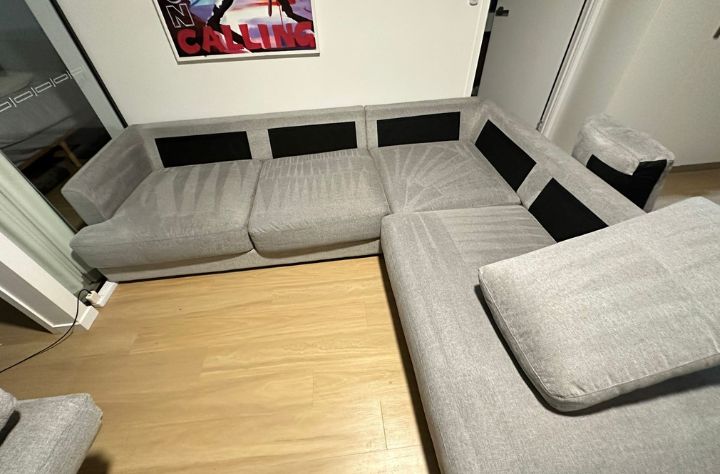
You’ve cleaned it. You’ve scrubbed it. Maybe you even rented a machine. But a week later, that sour, musty, or doggy smell is back. Here is the direct answer: Your couch still smells after cleaning because the source of the odor is trapped deep in the cushioning or backing, and the cleaning method you used likely pushed it deeper rather than extracting it. Surface cleaning often activates bacteria, mold spores, or old urine salts without removing them completely.
This guide will walk you through why this happens and exactly how to fix it permanently, using techniques professional restoration crews rely on.
The “Wet Dog” Paradox: Why Moisture Worsened the Smell
You expect a wet couch to smell clean. Instead, you get hit with a smell worse than before you started. You are not imagining it. This is usually microbial bloom.
You Activated Dormant Bacteria
Most fabric upholstery is a trap for skin cells, sweat, and dust mites. When you introduce water or steam, you are feeding dormant bacteria. As they consume the organic matter you just wet, they release foul-smelling waste gases.
This is the same principle that makes a wet towel smell musty within hours. If your couch took longer than a day to dry after cleaning, this is likely your culprit.
You Didn’t Remove the Soil, You Relocated It
Store-bought carpet shampooers and spot cleaners are notorious for this. They inject soap and water, but their suction power is weak. You are essentially washing dirt off the fabric face and letting the dirty water wick deep into the foam cushions.
As the couch dries, capillary action pulls that now-dirty water to the surface. You smell the concentrated residue that was previously spread out and dry.
Urine: The Chemistry Problem You Cannot Wash Away
If your couch was soiled by pets or children, you are dealing with uric acid crystals, not just a stain. These crystals are insoluble in water. A standard steam clean simply melts them and spreads them around. When the air gets humid, the crystals re-form, reactivate, and release ammonia gas. That is the sharp, lingering smell.
You need an enzyme digester, not a detergent. Enzymatic cleaners break down the crystal structure into digestible gases. However, if urine has soaked into the wood frame inside the couch, no amount of upholstery cleaning will work. The wood must be sealed or replaced.
How You Can Diagnose the Source Right Now
Sniffing the fabric surface is misleading. You need to isolate the layers.
- The Surface Test: Press your palm firmly on the fabric for 10 seconds. Smell your palm. If the smell is on your hand, you have residue problems on the fabric itself.
- The Crevice Test: Remove a cushion and deeply sniff the deck (the base of the couch) and the zipper seam. If the smell is stronger here, your padding is saturated.
- The Frame Check: Flip the couch and check the dust cover underneath. If it is torn, urine likely soaked into the wood particle board. If the wood smells, the couch is often unsalvageable.
Step-by-Step: How You Can Actually Remove the Odor
Stop shampooing. You need extraction and counteraction.
What You Will Need
- Wet/dry vacuum with extraction nozzle (high suction)
- White vinegar (acetic acid for alkaline odor neutralization)
- Enzymatic cleaner (specifically for urine if pets are involved)
- High-velocity air mover or box fans
- Baking soda (as a moisture absorber, not an odor eliminator)
Phase 1: Deep Dry Extraction
Before adding any liquid, use a dry vacuum with a crevice tool. Vibrate the cushions aggressively to bring dry, embedded soil to the surface. You would be surprised how much smelly grit lives deep in the foam.
Phase 2: The Oxidation Rinse
If the smell is general must or sourness, do not apply soap. Soap leaves a sticky residue that becomes rancid if not rinsed perfectly.
- Mix 1 part white vinegar to 3 parts distilled water.
- Lightly mist the fabric. Do not soak it.
- Blot immediately with a dry microfiber cloth.
Vinegar is a weak acid that neutralizes the alkaline odor of decay. It flashes off quickly, leaving a temporary vinegar smell that disappears completely in hours, taking the must with it.
Phase 3: The Enzymatic Soak (Pet Owners Only)
If urine is involved, skip the vinegar for now. You need a specific enzyme cleaner.
Saturate the affected area exactly as deeply as the urine went. If the urine hit the foam, spraying the surface is pointless.
Cover the area with plastic wrap to slow evaporation. Enzymes need wet dwell time to eat the crystals. You need to keep the area wet for 12 to 24 hours.
This is messy, but it is the only way to reach deep into foam.
Phase 4: The Drying Protocol
You have a 6-hour window before bacteria bloom again. Do not let it air dry slowly.
- Wet/dry vac the entire couch until it feels slightly damp, not wet.
- Set up a fan pointing directly at the cushioning seams.
- If you can, use a dehumidifier in the room.
- Flip the cushions every 30 minutes for the first few hours.
Common Mistakes That Trap Odors
Your technique might be the problem. Based on industry research into upholstery restoration, here is where most DIY cleaners fail.
- Saturating the Backing: Never inject cleaning solution into cushions unless you can remove the foam and physically rinse and squeeze it out in a bathtub. Waterlogged foam rots.
- Using Heat on Proteins: Steam cleaning a urine-soaked couch bakes the proteins into the fiber, locking the smell in permanently.
- Fabric Softener Hacks: Do not mix fabric softener with water as a spray. It coats fibers in animal fat that oxidizes and stinks over time.
- Ignoring the Chaise Tongue: On sectionals, the corner seat is the structural hub. If it is smelly, the smell travels through the wooden frame to the other seats.
When You Should Call a Professional (And When to Let Go)
If you have cleaned the couch three times and the smell returns within 24 hours of humid weather, you are likely dealing with structural saturation.
The Couch Is Salvageable If:
- The smell is generally even but faint.
- The cushions have zippers allowing you to remove the foam core for replacement.
- The frame is solid hardwood. You can sand and seal hardwood. You cannot save pressboard.
The Couch Is a Loss If:
- The dust cover on the bottom is black or has mold colonies.
- The frame is particle board that has swollen. That swelling traps bacteria forever.
- You can smell it from six feet away the moment you walk in the room.
Frequently Asked Questions
Q: Why does my couch smell worse after steam cleaning?
A: The heat likely activated urine salts or multiplied bacteria in the cushion core. Steam adds high-temperature moisture; if the bacteria are deep, they flourish in the warm, wet environment.
Q: How do I get a sour milk smell out of a couch?
A: Fat proteins cause this. You need a fat-cutting surfactant like Dawn dish soap (a tiny drop in a gallon of water), agitated by hand, and then extracted immediately with a vinegar rinse. Do not leave soap in the cushion.
Q: Can I use an ozone generator?
A: Yes, but with extreme caution. Ozone can degrade latex foam and natural rubber, and it is a lung irritant. It oxidizes surface odor but rarely penetrates deep into foam where the problem lives. It is a finishing touch, not a cure.
Q: Will baking soda in the cushions fix the smell?
A: No. Baking soda is a desiccant (drying agent) and mild abrasive. It does not kill bacteria or neutralize deep-set ammonia. It helps with surface moisture, but you will just end up with a couch that smells like "must plus baking soda."
Q: How long should I leave a fan on my couch after cleaning?
A: Until it is bone-dry to the touch, no exceptions. This may take 8 to 24 hours depending on humidity. A slow-drying couch is a guaranteed recipe for returning mildew smells.
Key Takeaways
The nose test is structural: If the inside of the cushion or the deck smells, scrubbing the surface is a waste of time.
Water is the enemy of foam: If you cannot extract every drop, you are better off dry cleaning.
Chemistry trumps fragrance: Masking agents are temporary. You need enzymes (for organic waste) or acid rinses (for bacteria) to break the molecular bond causing the stench.
Speed matters: If you are cleaning today, plan to have it dry by tonight. Buy a fan before you buy more cleaner.
If you have done all this and the smell persists, remove one cushion, cut a tiny slit in the internal foam, and sniff it. If it is black inside or reeks, replace the foam insert. That is often the only fix that works.